A host of businesses and consultants are backing away from the UN climate summit at the city of Belém, known as the gateway to the Amazon, deterred by a difficult political backdrop, up to $2,000-a-night for hotel rooms and lengthy travel.
Financial institutions, consultancies and advisers to businesses, which attended the climate talks in previous years, told the Financial Times they instead planned to send a smaller contingent to São Paulo or Rio de Janeiro where adjacent finance and climate conferences are being held.
This includes the UN PRI summit, an international responsible investment event, at the business hub of São Paulo, and a global forum for mayors, governors and regional leaders being held in Rio in early November, the week before the COP begins.
Unlike previous years, the so-called leaders’ summit involving heads of state, which usually marks the start of the world’s most important climate talks, is now also scheduled to take place in the days beforehand.
Despite criticism about the thousands of business attendees. which swelled COP numbers to beyond 65,000 at its peak in Dubai, the withdrawal of the private sector goes against efforts by public bodies to encourage business to play a bigger role in climate action.
“Businesses are saying it is going to be too expensive and hard to find accommodation. They are focusing on events in Rio and São Paulo instead,” said one person advising the COP30 team.
COP30 president-designate André Aranha Corrêa do Lago told the FT recently that private hotel prices were “absolutely absurd”. “We thought the hotels were going to be reasonable, and they are not being reasonable,” he said, adding his team was “trying every legal means to lower the prices.”
The choice of the port city in northern Brazil by President Luiz Inácio Lula da Silva was on the grounds that it would directly expose delegates to an important area at risk of climate change.
Both rich and developing countries, including small islands and African nations, have been vocal in their concerns over the logistics, which have overshadowed UN preparations. This week, the UN climate change arm held an embassies meeting where the accommodation issues were discussed.
European officials registered to attend have said they were uncertain about where they would be accommodated and might reduce their negotiating teams as a result. Other officials said they had to book rooms in “love hotels” with cheaper hourly tariffs, or hotels that were not yet built.
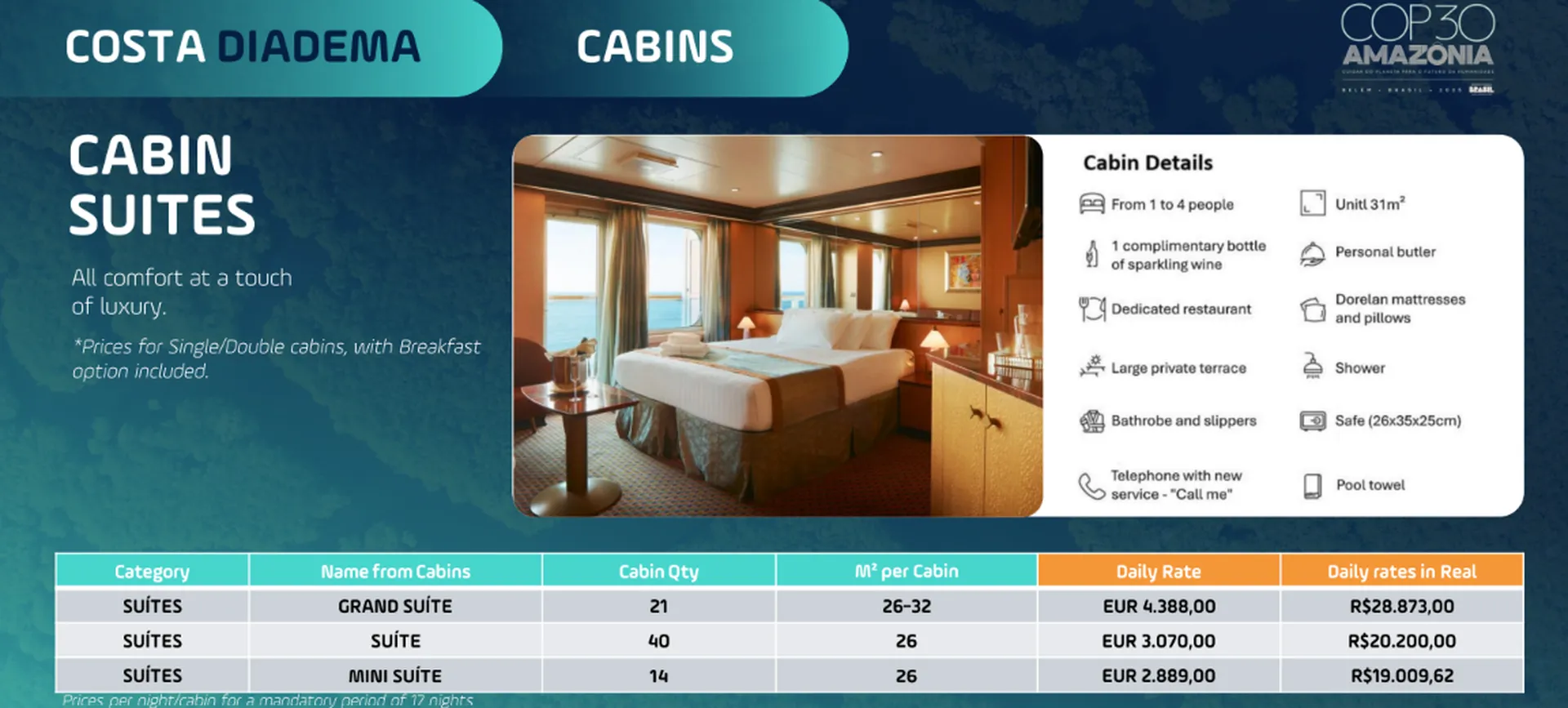
The COP30 hosts have resorted to converting classrooms and bringing in river cruise ships in an attempt to provide beds for the 50,000 delegates expected.
The cruise ship accommodation will initially be made available to small developing nations and island states, with a rate capped at up to $220 a night. Other countries will also be able to access rooms costing up to $600 a night. Valter Correia, the special secretary for COP30, said the priority was for all country negotiators to be accommodated.
Belém would also have difficulty presently in hosting many presidential or private jets at one time, but the COP30 team said the airport was “undergoing expansion, with investments to increase operational capacity”.
It added that the flight network would be expanded during November, with direct flights available from major hubs, such as Lisbon and Miami.
The COP30 team maintained it planned to host the leaders’ summit in Belém, which is a 3.5 hour flight from São Paulo and 2.5 hours from the capital of Brasília, in spite of speculation that it could be moved to a more accessible location.
The summit organisers added: “For COP30 to be a milestone in implementation, the participation of the private sector and other actors — such as banks, local governments, and civil society — is essential.”
Climate Capital

Where climate change meets business, markets and politics. Explore the FT’s coverage here.
Are you curious about the FT’s environmental sustainability commitments? Find out more about our science-based targets here